
Check also:





Mini Track Chair:
The Green Transition is frequently discussed as a technical challenge—swapping fossil fuels for renewables, retrofitting grids, and electrifying transport. However, technology alone cannot drive systemic change. Without Social Innovation and Community Wealth Building, climate and energy policies risk triggering negative public reactions, worsening inequality, or leaving vulnerable communities behind. Social innovation integrates new practices, business models, governance structures, and community initiatives that change how society interacts with technology and natural resources. It creates the cultural, economic, and institutional conditions for people to adopt, afford, and sustain technological innovations that ultimately contribute to community wealth building. Moreover, social innovation ensures that decarbonization is politically viable, economically equitable, and anchored in everyday human behaviour.
Social innovations are intentionally designed around generational collaboration, combining the capital and experience of older generations with the urgency and digital agility of younger cohorts. The differing priorities, economic burdens, political power, and climate risks experienced across generations—primarily between younger cohorts (Gen Z, Millennials) and older cohorts (Gen X, Baby Boomers), left unaddressed, create political resistance, capital bottlenecks, and social polarization. This dynamic is rooted in a fundamental asymmetry: older generations hold the majority of political and capital power, while younger generations will bear the majority of long-term climate consequences. Social innovation restructures economic, governance, and civic relationships so that the assets, influence, and skills of all age groups complement one another. Also, social innovation reconfigures relationships, governance, and resource distribution to address intergenerational gaps.
This Mini-Track aims to investigate the drivers and shapers of risks associated with the green transition, with a particular focus on unemployment and energy-related poverty (across youth, older people and women). It will also explore the social value to young people, single parents and elderly as a result of transition from fossil fuels to green energy sources, with a focus on inclusion, equity, resilience and wellbeing. Moreover, it will examine how intergenerational activities and dynamics can enhance social innovation along with making an economic contribution to society. This Mini-Track constitutes a dissemination channel for the key research outputs of the HORIZON-MSCA-SE-2024 project Social INnovation methods and Tools for Communities Affected by Transition(s) (SINTACT). SINTACT aims to develop social innovation tools and methods to support regions in achieving a fair and inclusive transition towards a green economy.
The main topics covered by the hereby call for papers are related to:
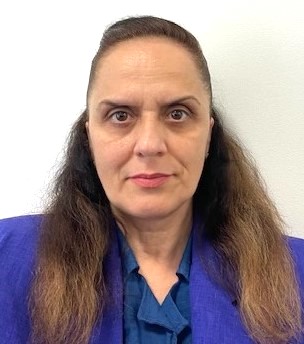
Carmen Păunescu
is a Professor of Entrepreneurship at the UNESCO Department for Business Administration at Bucharest University of Economic Studies (ASE), Romania. Her research interests lie in the areas of social entrepreneurship, impact innovations, sustainable business models, social sustainability and wellbeing. She has extensive experience in the management of national and European research and has participated in numerous international research and cooperation projects. She is the director of the Doctoral School of Business Administration II at ASE and a PhD academic supervisor in Business Administration (since 2011). Under her coordination, more than 15 doctoral theses were supervised to completion, covering topics that concerned the development of sustainable entrepreneurship, rural and community development, innovation efficiency and social innovation. Carmen acted as an expert and local coordinator of the Erasmus+ projects “CLLC—Community Learning for Local Change”, “VISEnet—Village social enterprise: learning material, guidance and networking” and „RuralCOM – Joint curriculum for rural community development” and COST Action CA 18236 Multidisciplinary innovation for social change. Currently, she is the partner manager of the HORIZON-MSCA-SE-2024 project Social INnovation methods and Tools for Communities Affected by Transition(s) (SINTACT). Carmen published over 50 peer-reviewed articles, books and book chapters.
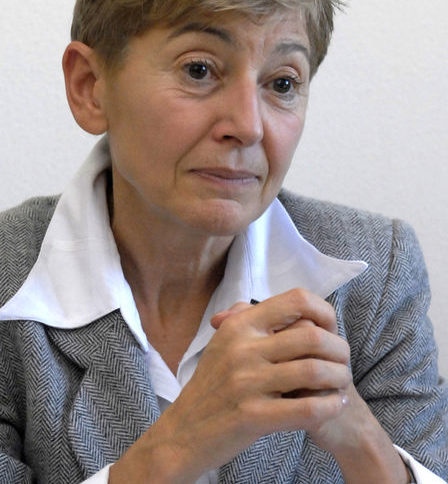
Albena Vutsova
is a Professor and R4 researcher at the Faculty of Economics and Business Administration at Sofia University “St. Kliment Ohridski”, Bulgaria. Her research interests lie in the areas of innovation and entrepreneurship, research and impact assessment, science and higher education policy, social entrepreneurship and civil society. She has extensive experience in the management and evaluation of national and European research, innovation and education programmes and has participated in numerous international research and cooperation projects. Her current research and project activities cover social innovation, sustainability and the green transition, social economy, gender-based violence, digital transformation, and research and innovation policy. She coordinates and participates in projects funded under Horizon Europe, Erasmus+, Digital Europe, COST and national research programmes. She has extensive experience in supervising doctoral researchers working on educational, economic and social challenges. Albena Vutsova has more than 20 years of professional experience in the management of national and European programmes and projects in research and education and has contributed as an expert to the development of research and education policies at national and European level. She has also served as a member of the Board of Governors of the European Commission’s Joint Research Centre (JRC). She has authored and co-authored more than 80 scientific publications, including research on innovation, research assessment, social economy and entrepreneurship, SMEs, sustainability and public policy.

Mary McDonnell Naughton
is a Registered Nurse, Midwife, and Registered Nurse Tutor. She is currently a lecturer at the Technological University of the Shannon, Ireland and Chairperson of College’s Research Ethics Committee. She holds a PhD from the College of Medicine, University College Dublin, Ireland and has extensive research experience with members of the interdisciplinary team, beeing involved in collaborating international research across disciplines. Mary has supervised students and engaged in various areas of research from Child Health, Smoking, Alcohol and Learning Disability to aspects associated with the Older Person, especially the centenarian. She has also been a member of various European COST actions in Old-Age Social Exclusion and Ageism. Along with an interest in Ethics, Mary also has an interest in innovation, social and community engagement work and has engaged in various community research projects. Presently, she is involved in supervising PhD students in various areas from Centenarians and Factors Contributing to Successful Ageing, through to novel ICT enabling technologies that enhances quality of life to cross generational changes in relation to food preferences.


