
Check also:


Mini Track Chair:
This mini-track explores how maritime logistics and port ecosystems develop business models that support strategic connectivity, competitiveness, and long-term adaptation in a changing international environment. It focuses on the role of ports and related transport networks as key enablers of exchange, coordination, and regional integration, with particular attention to how organizations respond to technological change, infrastructure pressures, and evolving trade patterns.
The track aims to examine how firms, institutions, and public actors build value through improved connectivity, collaborative governance, and operational innovation. It is especially relevant for research on the Port of Constanța and the Middle Corridor, where questions of leadership, intermodal integration, digitalization, and strategic positioning intersect with broader themes of knowledge, technology, and energy transition.
Keyword: Maritime logistics; Port leadership; Digital ecosystems; Artificial intelligence; Smart ports; Sustainability
The main topics covered by the hereby call for papers are related to:
As the global economy seeks resilient trade routes to bridge the East and the West, the Middle Corridor has emerged as a primary arterial route connecting Eurasian markets to Europe via the Caspian Sea, the Black Sea, and the Danube River. This mini-track explores how modern business models driven by knowledge transfer, digital technologies, and energy transition can close the strategic gap between regional logistics ecosystems.
We invite academic researchers, industry specialists, and policy makers to contribute theoretical frameworks, empirical research, and live-case studies addressing the operational, economic, and managerial dynamics of interregional trade.
- Business Models and East – West Connectivity – Focuses on multimodal connectivity, intermodal pricing, risk management, and logistics integration across European and Asian gateways to create resilient trade bridges.
- Knowledge Transfer and Maritime Leadership – Covers strategic port management, governance frameworks, institutional capacity building, and cross-border public-private partnerships (PPPs).
- Technology and Smart Corridors – Examines the digitalization of port operations, paperless customs systems, IoT-driven supply chain tracking, and digital twin applications for optimizing terminal performance.
- Energy Transition and Sustainable Ecosystems – Addresses decarbonization in maritime shipping, alternative marine fuels, green port infrastructure (ESG), and energy supply chain logistics across the Black Sea and Danube ecosystems.
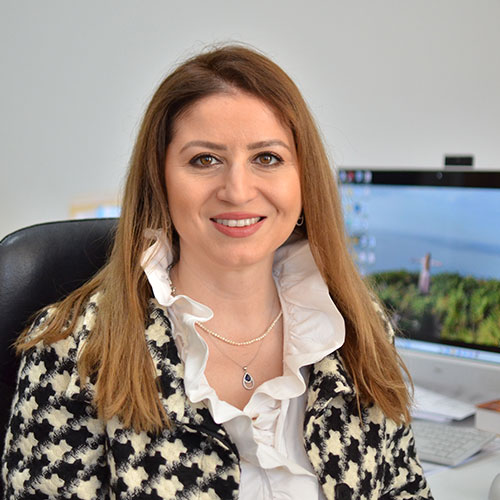
Maria-Alina Carataș
is an experienced lecturer at the UNESCO Department for Business Administration, Bucharest University of Economic Studies. Her teaching and research focus on sustainability, organizational strategy, and innovation in business and public administration. She has contributed to multiple EU-funded projects promoting inclusive education, regional development, and the implementation of nature-based solutions, with a particular emphasis on marine pollution reduction and sustainable growth in the Black Sea region.

Irene Rosberg
is the Director of the Executive MBA in Shipping and Logistics (The Blue MBA) at Copenhagen Business School (CBS), Europe’s leading program in maritime management. She has been responsible for the program’s design, development, and coordination since its inception. Ms. Rosberg plays a key role in building global partnerships and advancing research on emerging challenges and strategic transformations in the maritime industry. She serves on several international boards and committees and is a frequent speaker at leading global maritime events.


